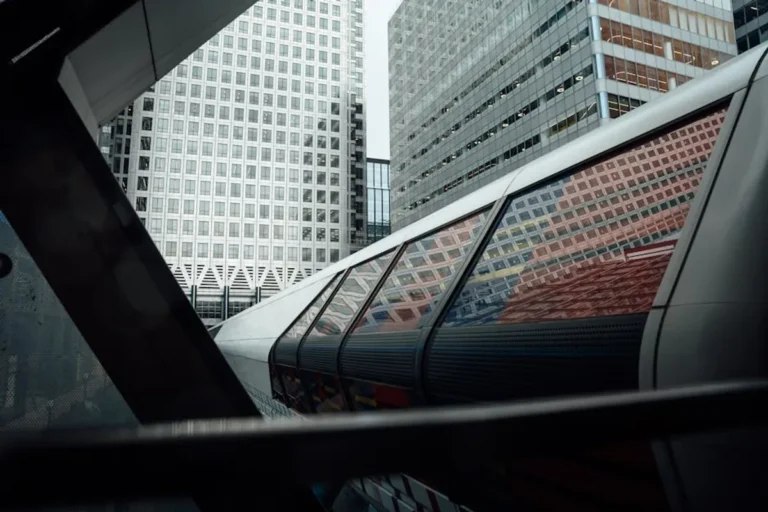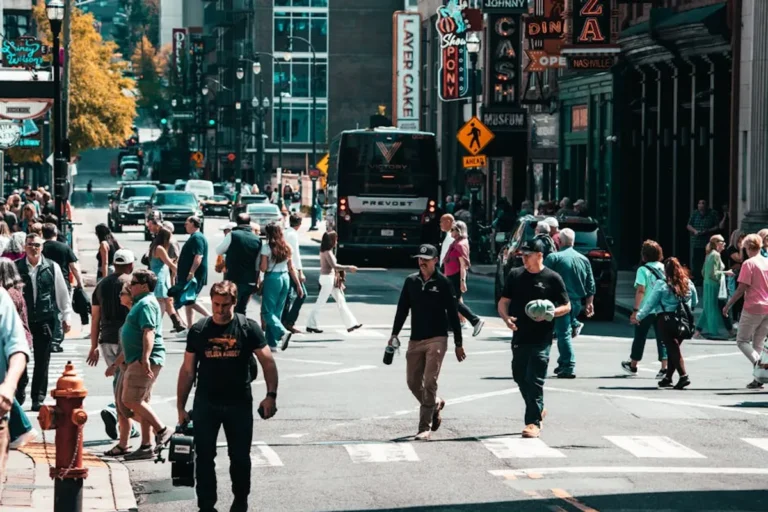

Entering the field of city design requires a foundational understanding of its principles, history, and practical applications. For beginners, selecting the right entry points into this complex discipline is crucial. The books highlighted here provide essential frameworks, historical context, and actionable insights, moving beyond theoretical abstractions to offer concrete examples of how cities function, evolve, and can be intentionally shaped. This curated selection focuses on accessibility, relevance, and the ability to spark critical thinking about urban environments, laying a solid groundwork for further study or professional engagement in urban planning, architecture, landscape architecture, or public policy.
What to Look For in a Beginner City Design Book
When starting out in city design, the sheer volume of literature can be daunting. Prioritize books that offer a clear introduction to core concepts without oversimplifying the complexities. Look for works that integrate historical perspective with contemporary challenges, demonstrating how past decisions influence present urban forms. Visual aids such as maps, diagrams, and photographs are invaluable for illustrating abstract ideas and providing tangible examples. Practical applicability, even if theoretical, helps bridge the gap between academic study and real-world impact. Finally, consider the author's background and the book's critical reception; influential texts often provide a more robust starting point for understanding the field's evolution and ongoing debates.
1. The Death and Life of Great American Cities by Jane Jacobs
Jane Jacobs's seminal 1961 work challenges conventional urban planning theories of her era, advocating for dense, diverse, mixed-use neighborhoods. She argues that vibrant city life emerges from intricate social interactions within walkable, human-scaled environments, rather than from grand, abstract master plans. Jacobs introduces concepts like "eyes on the street" for safety, the importance of "mingling uses," and the necessity of short blocks and aged buildings to foster economic and social diversity. Her critique of urban renewal and highway projects remains profoundly influential, shifting focus from top-down design to organic, community-driven urbanism.
Best For: Understanding the social dynamics of urban spaces and the unintended consequences of modernist planning. Ideal for those interested in human behavior within cities.
Pros:
- Presents a compelling, human-centric view of urban vitality.
- Challenges established planning dogma with observational evidence.
- Highly readable and influential, foundational for critical urban thought.
- Emphasizes the role of diversity and complexity in healthy urban ecosystems.
Cons:
- Primarily focuses on American cities of the mid-20th century, which may limit direct applicability to other contexts.
- Critiques are more prominent than prescriptive design solutions.
- Can be perceived as romanticizing certain aspects of traditional urban life.
Verdict: An indispensable read for any beginner, offering a powerful counter-narrative to traditional urban planning that emphasizes the lived experience of city dwellers. It teaches critical observation and skepticism towards grand, untested theories.
2. The Image of the City by Kevin Lynch
Kevin Lynch's 1960 classic explores how people perceive and navigate urban environments, introducing the concept of "legibility" in city design. He identifies five key elements that contribute to a city's imageability: paths, edges, districts, nodes, and landmarks. Lynch argues that a well-structured and easily understood mental map of a city enhances a resident's sense of belonging and orientation. His methodology involved interviewing city residents and mapping their perceptions, providing a user-centric approach to urban form and spatial organization.
Best For: Grasping the psychological and cognitive aspects of urban form and how design influences human perception and navigation.
Pros:
- Provides a practical vocabulary for analyzing urban spaces.
- Introduces a systematic method for understanding urban legibility.
- Emphasizes the user's perspective in design, rather than just the designer's.
- Concepts are widely applicable across different urban scales and contexts.
Cons:
- Focuses heavily on visual and spatial elements, potentially underplaying social or economic factors.
- The case studies are specific to Boston, Jersey City, and Los Angeles, requiring generalization.
- Can be somewhat abstract for those seeking immediate, concrete design solutions.
Verdict: Essential for understanding how urban elements contribute to a cohesive and navigable city experience, offering a framework for evaluating and designing urban legibility from the ground up.
3. A Pattern Language by Christopher Alexander, Sara Ishikawa, Murray Silverstein, Max Jacobson, Ingrid Fiksdahl-King, Shlomo Angel
This ambitious 1977 work presents 253 "patterns" for building and planning, ranging from regional planning to the design of individual rooms. Each pattern describes a problem that occurs repeatedly in our environment, followed by a solution in the form of design instructions. The patterns are interconnected, forming a hierarchical language that allows users to design environments at various scales, from the layout of a city to the placement of windows. It emphasizes user participation and organic growth over centralized, top-down design processes.
Best For: Learning a systematic, interconnected approach to design problems at multiple scales, from urban planning to architectural details.
Pros:
- Provides a comprehensive, actionable toolkit for design.
- Promotes a holistic view of design, connecting different scales.
- Empowers users to participate in the design of their own environments.
- Each pattern is clearly articulated with diagrams and examples.
Cons:
- The sheer volume of patterns can be overwhelming for beginners.
- Some patterns might seem dated or culturally specific.
- Requires interpretation and adaptation rather than strict adherence.
Verdict: A monumental resource that offers a unique, granular approach to understanding and creating functional, humane environments. It teaches a design philosophy centered on solving recurring problems with proven solutions.
4. Cities for People by Jan Gehl
Jan Gehl, a Danish architect and urban planner, advocates for cities designed around human scale and experience. Published in 2010, this book synthesizes decades of research and practice, illustrating how to create vibrant public spaces that encourage walking, cycling, and social interaction. Gehl critiques car-centric planning and offers practical strategies for prioritizing pedestrians and public life, using numerous examples from cities worldwide that have successfully adopted human-centered design principles.
Best For: Understanding human-scaled urbanism and practical strategies for improving public life, walkability, and cycling in cities.
Pros:
- Strong emphasis on empirical observation of human behavior in public spaces.
- Offers clear, actionable design principles supported by extensive case studies.
- Visually rich with diagrams, maps, and photographs illustrating concepts.
- Advocates for a shift from planning for cars to planning for people.
Cons:
- Can be perceived as prescriptive, focusing on specific design interventions.
- The examples, while global, lean heavily on European success stories.
- May not fully address the economic and political challenges of implementing such changes.
Verdict: An accessible and inspiring guide for anyone looking to understand how to make cities more livable and enjoyable by focusing on the pedestrian experience and public realm.
5. Walkable City: How Downtown Can Save America, One Step at a Time by Jeff Speck
Jeff Speck, a city planner and urban designer, argues in this 2012 book that walkability is the key to creating sustainable, economically vibrant, and healthy cities. He outlines ten steps that cities can take to become more walkable, focusing on practical policy changes and design interventions that prioritize pedestrians over automobiles. Speck uses clear, persuasive arguments and real-world examples to demonstrate the benefits of walkable urbanism, from improved public health to reduced infrastructure costs.
Best For: Learning practical, policy-oriented approaches to improving urban walkability and understanding its broad societal benefits.
Pros:
- Provides concrete, actionable steps for urban improvement.
- Synthesizes complex urban planning issues into an accessible narrative.
- Strong focus on the economic and health benefits of walkability.
- Engaging and persuasive writing style.
Cons:
- Primarily focused on American urban contexts, which may not translate directly everywhere.
- Can be seen as advocating for a specific urbanist agenda (New Urbanism).
- Less emphasis on the historical or theoretical underpinnings of city design.
Verdict: A highly practical and compelling read for beginners interested in the tangible ways design decisions impact daily life and the overall health of a city, with a clear roadmap for change.
6. The Concise Townscape by Gordon Cullen
Originally published in 1961, Gordon Cullen's "Townscape" (later condensed into "The Concise Townscape") introduces the concept of "serial vision" – the idea that a city is experienced as a sequence of revelations as one moves through it. Cullen uses evocative sketches and concise text to illustrate how elements like enclosure, focal points, and changes in level create dramatic and memorable urban experiences. He emphasizes the importance of visual drama and the emotional impact of urban form, moving beyond purely functional considerations.
Best For: Developing an eye for the aesthetic and experiential qualities of urban spaces, and understanding how visual sequences shape perception.
Pros:
- Highly visual and intuitive, making complex concepts accessible.
- Focuses on the human experience of moving through urban environments.
- Introduces fundamental concepts of urban aesthetics and form.
- Inspires creative thinking about spatial composition.
Cons:
- Less focused on social, economic, or environmental aspects of city design.
- Primarily concerned with visual composition rather than functional planning.
- The examples are largely drawn from European contexts.
Verdict: A classic that trains the eye to appreciate the visual drama and sequential experience of urban spaces, offering a foundational understanding of urban aesthetics for designers.
7. Happy City: Transforming Our Lives Through Urban Design by Charles Montgomery
Charles Montgomery's 2013 book explores the intersection of urban design, psychology, and neuroscience to understand how cities can be designed to enhance human happiness and well-being. He travels the world, examining urban experiments and research that demonstrate how factors like commuting, public spaces, density, and green infrastructure influence mood, social connection, and overall life satisfaction. Montgomery argues for a shift towards designs that foster community, reduce stress, and promote active lifestyles.
Best For: Exploring the psychological and social impacts of urban design and how cities can be shaped to improve human well-being and happiness.
Pros:
- Integrates diverse fields like urban planning, psychology, and economics.
- Uses compelling storytelling and global case studies.
- Highlights the measurable impact of design on individual and collective happiness.
- Challenges conventional wisdom about urban development.
Cons:
- Can sometimes lean towards anecdotal evidence, though backed by research.
- The focus on "happiness" might be seen as subjective or difficult to quantify precisely.
- Less prescriptive on specific design solutions compared to other books.
Verdict: An engaging and thought-provoking read that broadens the scope of city design beyond physical form to include its profound effects on human psychology and social fabric.
8. The Urban Design Handbook by Frederick Steiner
Frederick Steiner's handbook, first published in 2007, serves as a comprehensive introduction to the principles and practices of urban design. It covers a broad range of topics, including the history of urban design, theoretical frameworks, design processes, and practical considerations such as land use, transportation, and public space. The book is structured to provide a systematic overview, making complex concepts accessible through clear explanations and illustrative examples. It bridges the gap between urban planning and architecture.
Best For: A systematic, academic overview of urban design principles, processes, and historical context. Ideal for students seeking a structured introduction.
Pros:
- Offers a broad and structured introduction to the field.
- Covers both theoretical and practical aspects of urban design.
- Includes historical context and contemporary challenges.
- Accessible language and clear organization.
Cons:
- Can be more academic in tone compared to some other books on the list.
- May not delve into specific design techniques with great depth.
- Some examples might require additional context for full understanding.
Verdict: An excellent foundational textbook for beginners, providing a solid academic framework for understanding the multifaceted discipline of urban design.
9. Design of Cities by Edmund N. Bacon
Edmund Bacon's 1967 classic provides a sweeping historical overview of city design, tracing its evolution from ancient Egypt and Greece through Renaissance Europe to modern American urbanism. Bacon, a prominent urban planner, illustrates how design decisions throughout history have shaped cities and influenced human experience. He uses detailed drawings and historical analyses to demonstrate recurring patterns and innovative solutions in urban form, emphasizing the role of the designer in shaping the public realm.
Best For: Understanding the historical evolution of urban design and the continuity of design principles across different eras and cultures.
Pros:
- Rich historical perspective, showcasing the lineage of urban design ideas.
- Beautifully illustrated with historical maps, plans, and drawings.
- Connects design principles to specific historical examples.
- Emphasizes the designer's role in creating coherent urban structures.
Cons:
- Can be dense with historical detail, potentially overwhelming for some beginners.
- Focuses more on master planning and grand designs, less on organic urbanism.
- Predates many contemporary concerns like sustainability and social equity.
Verdict: A visually compelling historical journey through urban design, offering beginners a crucial understanding of how cities have been conceptualized and built over millennia.
10. Order Without Design: How Markets Shape Cities by Alain Bertaud
Alain Bertaud, an urban planner with extensive experience at the World Bank, offers a unique perspective in his 2018 book, arguing that cities are primarily shaped by economic forces and market dynamics rather than top-down design. He critiques rigid master plans and advocates for flexible urban policies that accommodate market signals and individual choices. Bertaud uses economic models and global case studies to illustrate how land use, transportation, and housing markets interact to produce urban forms, often more efficiently than centralized planning.
Best For: Gaining an understanding of the economic forces and market dynamics that shape urban development, offering a counterpoint to purely design-centric views.
Pros:
- Provides a crucial economic perspective on urban development.
- Challenges conventional planning wisdom with data-driven arguments.
- Offers insights into how policies can facilitate, rather than hinder, efficient urban growth.
- Global examples from diverse economic contexts.
Cons:
- Can be technically dense with economic concepts, potentially challenging for those without an economics background.
- May be perceived as downplaying the role of design and social equity in favor of market efficiency.
- Less focused on aesthetic or experiential aspects of city design.
Verdict: An essential read for beginners to understand the powerful, often overlooked, economic forces that drive urban form, providing a critical balance to design-focused approaches.
11. The Social Logic of Space by Bill Hillier and Julienne Hanson
Published in 1984, this book introduces "space syntax," a theory and methodology for analyzing spatial configurations and their social implications. Hillier and Hanson argue that the spatial layout of buildings and cities profoundly influences human movement patterns, social interaction, and even cultural organization. They provide a quantitative framework for understanding how different spatial arrangements generate distinct social effects, moving beyond qualitative descriptions to offer measurable insights into urban form.
Best For: Understanding the relationship between spatial layout and social behavior, and learning a quantitative method for analyzing urban configurations.
Pros:
- Introduces a systematic, quantitative method (space syntax) for spatial analysis.
- Provides a powerful framework for understanding how space shapes social life.
- Moves beyond intuition to offer measurable insights into urban form.
- Applicable to various scales, from buildings to entire cities.
Cons:
- Can be theoretically dense and requires effort to grasp the methodology.
- The quantitative approach might initially seem abstract for beginners.
- Focuses heavily on spatial relationships, potentially less on other urban factors.
Verdict: A challenging but rewarding read that provides beginners with a rigorous, analytical toolset for understanding the deep connection between urban form and social function.
12. Street Design Handbook by the Institute of Transportation Engineers (ITE)
While often seen as a professional reference, the ITE's Street Design Handbook (various editions, e.g., 2010, 2019) offers a practical, technical foundation for understanding how streets are designed and function. It covers essential elements like roadway geometry, traffic calming, pedestrian facilities, bicycle infrastructure, and transit integration. For beginners, it provides a crucial insight into the engineering and design standards that underpin the physical reality of urban streets, moving beyond conceptual ideas to concrete implementation.
Best For: Gaining a practical understanding of the technical standards and engineering principles behind street design, crucial for implementing urban design concepts.
Pros:
- Provides concrete, technical specifications and design guidelines.
- Essential for understanding the practical constraints and opportunities in street design.
- Covers a wide range of street elements, from sidewalks to vehicle lanes.
- Highly relevant for anyone involved in urban infrastructure and public space.
Cons:
- More technical and less theoretical than other books on this list.
- Can be dry for those seeking a more philosophical or narrative approach.
- Primarily focused on North American engineering standards, though principles are broadly applicable.
Verdict: A vital technical resource that grounds abstract urban design concepts in the practical realities of street engineering, offering beginners insight into how design ideas are physically realized.
Choosing the Right City Design Book for Your Journey
The "best" city design book for a beginner ultimately depends on your specific interests and learning style. If your primary interest lies in the social dynamics of cities, Jane Jacobs or Jan Gehl will provide compelling perspectives. For those drawn to the aesthetic and perceptual qualities of urban spaces, Kevin Lynch or Gordon Cullen offer foundational insights. If you prefer a structured, academic approach, Frederick Steiner's handbook provides a comprehensive overview. For understanding the historical lineage of urban ideas, Edmund Bacon is indispensable. Those interested in the economic forces shaping cities will benefit from Alain Bertaud, while Bill Hillier and Julienne Hanson provide a rigorous analytical framework for spatial-social connections. Finally, for practical implementation, Jeff Speck and the ITE Handbook offer actionable guidance.
Consider starting with a book that aligns with your initial curiosity, then branch out to texts that challenge your assumptions or cover complementary aspects. Many of these books build upon each other, offering different lenses through which to view the same complex urban phenomena. A multidisciplinary approach, combining historical, social, economic, and technical perspectives, will provide the most robust foundation for any aspiring city designer.
Frequently Asked Questions About City Design Books
What is the difference between urban planning and city design?
Urban planning typically involves policy-making, land-use regulation, zoning, and strategic development over larger areas and longer timeframes. City design, or urban design, focuses more on the physical form, aesthetic quality, and functional layout of specific urban spaces, such as streets, public squares, and building interfaces, often working within the framework set by urban planning.
Do I need a background in architecture or engineering to understand these books?
No. While some books touch on architectural or engineering concepts, this list prioritizes works accessible to beginners from various backgrounds. They explain concepts clearly, often with visual aids. A genuine interest in how cities work and are shaped is the primary prerequisite.
Are older city design books still relevant today?
Absolutely. Many older books, such as those by Jane Jacobs or Kevin Lynch, are considered classics because they introduced fundamental concepts and critical perspectives that remain highly relevant. While specific examples or technologies may be dated, their core ideas about human behavior, urban form, and community dynamics continue to inform contemporary city design debates and practices.
How can I apply these book lessons in real life?
Start by observing your own city or neighborhood through the lens of these books. Identify paths, edges, nodes, and landmarks. Notice how public spaces are used, or how street design impacts walkability. Participate in local planning meetings or community design initiatives. The principles learned can inform your observations, critiques, and contributions to improving urban environments.
Should I read these books in a specific order?
There's no strict order, but starting with a foundational text like Jane Jacobs or Kevin Lynch can provide a strong conceptual base. Then, you might explore books that delve deeper into specific interests—whether it's historical context, human-scaled design, economic influences, or technical aspects. Reading books with contrasting viewpoints can also be highly beneficial for developing a nuanced understanding.