
Sustainable building design involves more than selecting environmentally friendly construction materials. The long-term performance of a building also depends on how effectively it manages heating, cooling, ventilation, and electricity consumption.
In warmer climates, air conditioning can represent a substantial part of residential energy use. Improving cooling efficiency therefore offers opportunities to reduce operating expenses while maintaining comfortable indoor conditions.
By combining thoughtful architectural design with appropriate mechanical systems, homeowners and property developers can make buildings more efficient throughout their useful lives.
Start With Passive Cooling Strategies
The most energy-efficient cooling system is one that does not need to operate unnecessarily.
Passive design strategies help reduce heat entering a building before mechanical cooling becomes necessary.
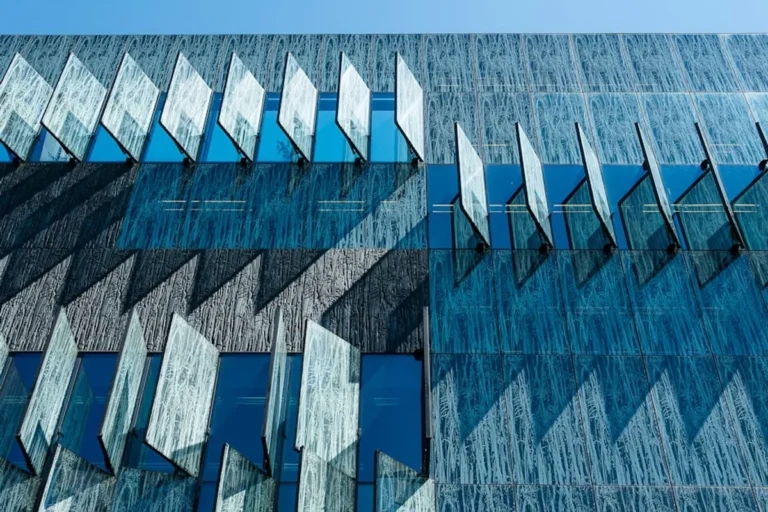
These strategies may include appropriate building orientation, exterior shading, reflective roofing materials, and carefully positioned windows.
For example, shading windows exposed to strong afternoon sunlight can help reduce indoor heat gain.
Natural ventilation can also be beneficial when outdoor temperatures and air quality make it appropriate.
The effectiveness of each strategy depends on local climate, building design, and occupancy patterns.
Insulation Reduces Cooling Demand
Insulation is commonly associated with keeping homes warm during winter, but it also plays an important role in summer comfort.
A well-insulated building can reduce the rate at which outdoor heat enters conditioned spaces.
Attics and roofs deserve particular attention because they may experience considerable solar heat exposure.
However, insulation improvements should be assessed alongside air sealing, ventilation, and moisture management.
An effective building envelope helps cooling equipment maintain indoor temperatures with less unnecessary operation.
Selecting Appropriate Cooling Equipment
Once unnecessary heat gain has been reduced, the next step is selecting equipment that matches the building's requirements.
Air conditioning systems vary in efficiency, capacity, controls, and installation configuration.
Correct sizing is particularly important.
Oversized equipment may operate inefficiently through frequent cycling, while undersized equipment may struggle during periods of peak demand.
Professional load calculations help determine the cooling capacity suitable for a particular building.
Energy efficiency ratings can then be considered alongside installation costs and expected usage.
Maintenance Is Part of Sustainable Operation
Efficient equipment still requires maintenance.
Restricted airflow, dirty coils, worn components, and control problems can interfere with cooling performance.
Routine inspections help identify these conditions before they cause substantial operational problems.
Property owners considering professional heating and cooling services can explore maintenance, repair, and system installation options from Southwest HVAC in Fullerton.
The broader principle is that efficient operation depends on both appropriate equipment selection and long-term upkeep.
Smart Controls Can Reduce Unnecessary Cooling
Modern thermostats and building controls provide opportunities to better match cooling operation with occupancy.
Programmable schedules can adjust temperatures during periods when a property is unoccupied.
Some connected systems also support remote monitoring and equipment alerts.
However, technology alone does not guarantee energy savings.
Thermostat schedules must reflect actual household needs, and connected controls should be configured correctly.
Simple, consistent temperature management can sometimes deliver comparable practical benefits without complex automation.
Consider the Entire Building Lifecycle
Sustainable design decisions should be evaluated over time.
A cooling system with a lower purchase price may incur higher electricity costs throughout its lifespan.
Similarly, expensive equipment upgrades may offer limited benefits if a building has substantial insulation or air leakage problems.
Evaluating installation costs, maintenance requirements, operating efficiency, and expected service life helps homeowners compare realistic alternatives.
The most effective improvements often involve a combination of building-envelope measures and properly designed mechanical equipment.
Final Thoughts
Energy-efficient cooling is an important element of sustainable residential design.
Passive shading, insulation, correctly sized equipment, and reliable maintenance can work together to reduce unnecessary energy use.
Rather than treating air conditioning as a standalone appliance, property owners should consider how cooling integrates with the entire building.
This approach can support long-term comfort, operating efficiency, and more responsible resource use.