The Moai statues of Rapa Nui (Easter Island) represent one of humanity's most compelling and enigmatic artistic achievements. These monumental figures, carved directly from volcanic rock, stand as silent witnesses to a complex Polynesian civilization, embodying deep cultural meaning, distinctive artistic style, and a dramatic history of creation, reverence, and eventual toppling. For anyone seeking to understand these iconic monoliths, a precise examination of their purpose, construction, and historical context is essential to move beyond surface-level recognition and grasp their profound significance.
The Meaning Behind the Moai
The primary function of the Moai was to embody the spirits of deified ancestors, known as aringa ora, or "living faces." These statues were not merely decorative; they were believed to be conduits of mana, a spiritual power that protected the community and ensured its fertility and prosperity. Each Moai represented a specific ancestor, facing inland to watch over their descendants and their land, rather than gazing out to sea.
Ancestral Reverence and Mana
The Rapa Nui people regarded their ancestors with immense reverence, believing that their spirits could intercede on behalf of the living. By carving these monumental effigies, they sought to capture and perpetuate the ancestral presence. The act of carving, transporting, and erecting a Moai was a sacred ritual, imbuing the stone with the ancestor's essence. The larger and more numerous the Moai, the greater the perceived mana and prestige of the clan that commissioned them, reflecting a direct link between spiritual power and societal standing.
Societal Status and Resource Allocation
Beyond spiritual veneration, the Moai also served as powerful markers of tribal identity and social hierarchy. The sheer scale and number of statues commissioned by a particular clan directly correlated with its power, wealth, and access to resources. The immense labor required—from quarrying tons of volcanic rock to transporting and erecting these colossal figures—demonstrated a clan's ability to mobilize significant human capital. This competitive display of monument building became a central feature of Rapa Nui society, driving innovation in engineering and organization, but also placing immense strain on the island's finite resources.
Distinctive Moai Style and Construction
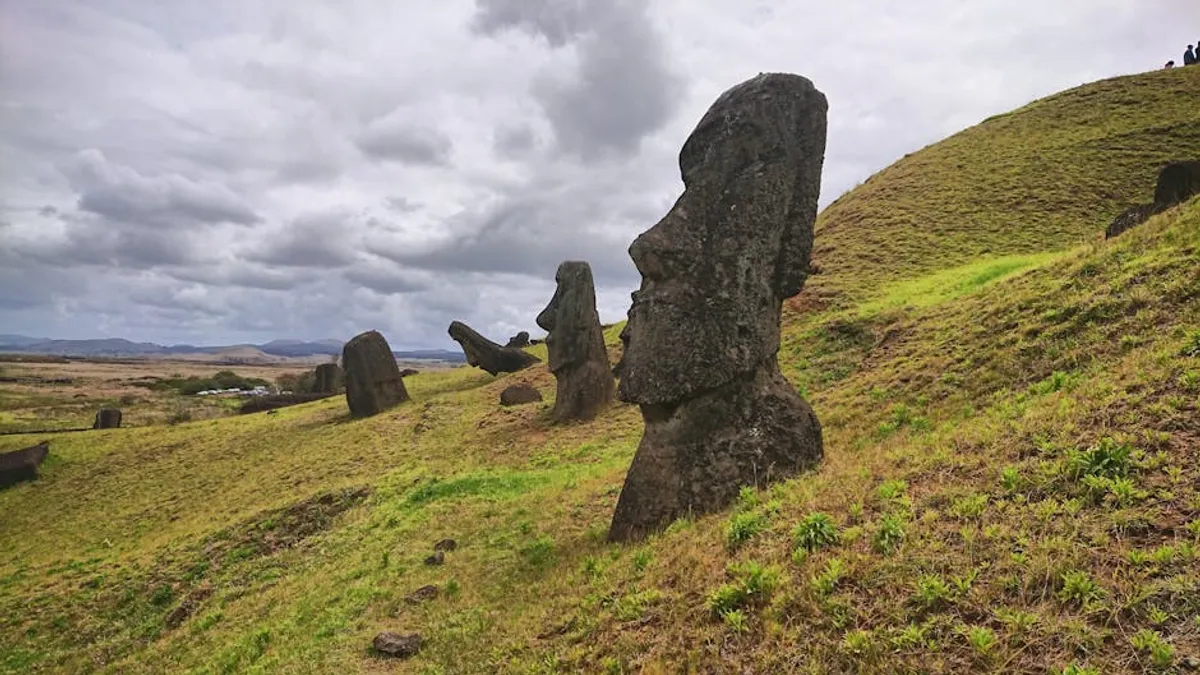
The artistic style of the Moai is instantly recognizable, characterized by exaggerated features and a solemn, imposing presence. Crafted primarily from the soft, easily workable tuff (compressed volcanic ash) found at the Rano Raraku quarry, these statues share common stylistic elements while exhibiting subtle variations that reflect different carving periods and clan preferences.
Anatomical Features and Variations
The typical Moai features an elongated head, accounting for approximately one-third of its total height. Prominent brows cast deep shadows over hollowed eye sockets, which originally held white coral and obsidian or red scoria inserts, giving the statues a piercing gaze. Other common features include a long, straight nose, thin lips with a downturned expression, and elongated ears. The torso is generally abbreviated, often terminating at the waist, with hands typically resting on the abdomen, sometimes with fingers touching the navel, a symbol of lineage. A significant number of Moai were adorned with pukao, large cylindrical topknots made of red scoria, quarried from Puna Pau. These pukao are believed to represent hair buns or ceremonial headdresses, further signifying status and spiritual power.
Quarrying and Transportation Techniques
The Rano Raraku quarry, a volcanic crater rich in basaltic tuff, served as the primary source for nearly all Moai. Carvers used basalt hand picks, known as toki, to chip away the rock. Once carved, the statues were detached from the bedrock and slid down the quarry slope. The method of transporting these multi-ton figures across the island to their ceremonial platforms, or ahu, remains a subject of ongoing archaeological debate. Theories range from using wooden sledges and rollers to a "walking" technique, where the statues were rocked side-to-side using ropes, leveraging their center of gravity. The construction of the ahu themselves, massive stone platforms often incorporating older structures and burial chambers, required sophisticated engineering and collective effort, serving as the sacred foundations upon which the Moai stood.
A Brief History of Moai Creation and Decline
The story of the Moai spans centuries, from a flourishing period of monumental construction to a dramatic societal collapse that saw many of these revered figures toppled.
The Golden Age of Moai Carving (c. 1000-1600 CE)
The peak period of Moai carving coincided with a time of relative prosperity and population growth on Rapa Nui. During these centuries, the island's resources, particularly trees, were abundant, enabling the complex logistical feats required for statue production. This era saw the construction of the largest and most elaborate Moai, reflecting a stable and highly organized society driven by a strong ancestral cult. The competition between clans to erect the most impressive statues fueled both artistic innovation and a relentless demand for materials and labor.
The Toppling and Collapse (c. 17th-19th Century)
By the 17th century, Rapa Nui faced an ecological crisis, primarily due to severe deforestation. The loss of trees led to soil erosion, reduced agricultural yields, and a scarcity of resources vital for canoe building and Moai transportation. This environmental degradation, coupled with increasing population density, triggered intense inter-tribal warfare. As societal order broke down, the reverence for ancestral figures eroded, and rival clans began systematically toppling each other's Moai, often face down, in a symbolic act of spiritual and political dominance. By the time European explorers arrived in the 18th and 19th centuries, many Moai were already lying prone, and the island's population had drastically declined due to disease and slave raids, further accelerating the collapse of the traditional culture.
Visual Guide to Key Moai Features
Understanding the visual components of a Moai provides insight into the beliefs and artistic conventions of its creators:
- Head: Disproportionately large, often representing intellectual capacity and spiritual insight.
- Eyes: Originally inlaid with white coral and obsidian, giving them a lifelike, watchful appearance, now mostly lost.
- Ears: Elongated lobes, a common aesthetic feature in Polynesian art, sometimes reaching to the shoulders.
- Nose: Prominent and aquiline, contributing to the statues' imposing facial structure.
- Mouth: Thin, downturned lips, conveying a solemn or resolute expression.
- Torso: Stylized and blocky, typically ending at the waist, with hands often resting on the abdomen, near the navel.
- Pukao: Red scoria "topknots" or cylindrical hats placed on the heads of some Moai, signifying high status or chieftainship.
- Ahu: The ceremonial stone platforms upon which the Moai were erected, often containing ancestral burial sites.
Pro Tip: When engaging with visual representations or visiting Moai sites, observe the subtle differences in facial features, the presence or absence of pukao, and the condition of the ahu. These details offer clues about the specific clan, period of creation, and the eventual fate of each statue, enriching the historical narrative beyond a singular, monolithic interpretation.
Preserving the Legacy: Modern Efforts and Interpretation
Today, the Moai are central to Rapa Nui's identity and global recognition. Extensive archaeological work continues to uncover new details about their construction and the society that created them. Conservation efforts focus on protecting the remaining statues from erosion, weathering, and the impact of tourism. The Rapa Nui people, through institutions like the National Parks Corporation (CONAF) and local cultural organizations, play a crucial role in safeguarding their heritage, balancing preservation with sustainable tourism and educational initiatives. The ongoing re-erection of some toppled Moai, often with international assistance, symbolizes a renewed connection to their ancestral past and a commitment to cultural revitalization.
Practical Insights for Understanding Moai
To fully appreciate the Moai, one must look beyond their immediate visual impact and delve into the multifaceted layers of their meaning. They are not merely stone carvings but complex cultural artifacts that encapsulate a society's spiritual beliefs, social structures, technological prowess, and ultimately, its environmental challenges. Understanding the Moai involves recognizing their role as ancestral protectors, symbols of power, and testaments to human ingenuity and resilience. Their enduring mystery continues to inspire research, conservation, and a deeper engagement with the unique history of Rapa Nui.
Frequently Asked Questions About Moai Statues
How many Moai statues are there on Rapa Nui?
There are approximately 900 known Moai statues on Rapa Nui, with nearly 400 still located at the Rano Raraku quarry, many unfinished, and around 300 standing on ceremonial platforms (ahu) across the island.
What material are the Moai made from?
The vast majority of Moai are carved from basaltic tuff, a relatively soft and workable compressed volcanic ash, primarily sourced from the Rano Raraku quarry. A few are made from harder materials like basalt or trachyte.
Why were the Moai toppled?
The toppling of Moai was primarily a result of escalating inter-tribal warfare and societal breakdown on Rapa Nui, exacerbated by ecological collapse and resource depletion. Toppling a rival clan's Moai was an act of dominance, aimed at destroying their spiritual power and prestige.
Can you visit the Moai today?
Yes, Rapa Nui is a national park and UNESCO World Heritage site, and visitors can explore many of the Moai sites, including the Rano Raraku quarry and various ahu. Access often requires a park ticket, and strict rules are in place to protect the statues and the environment.