
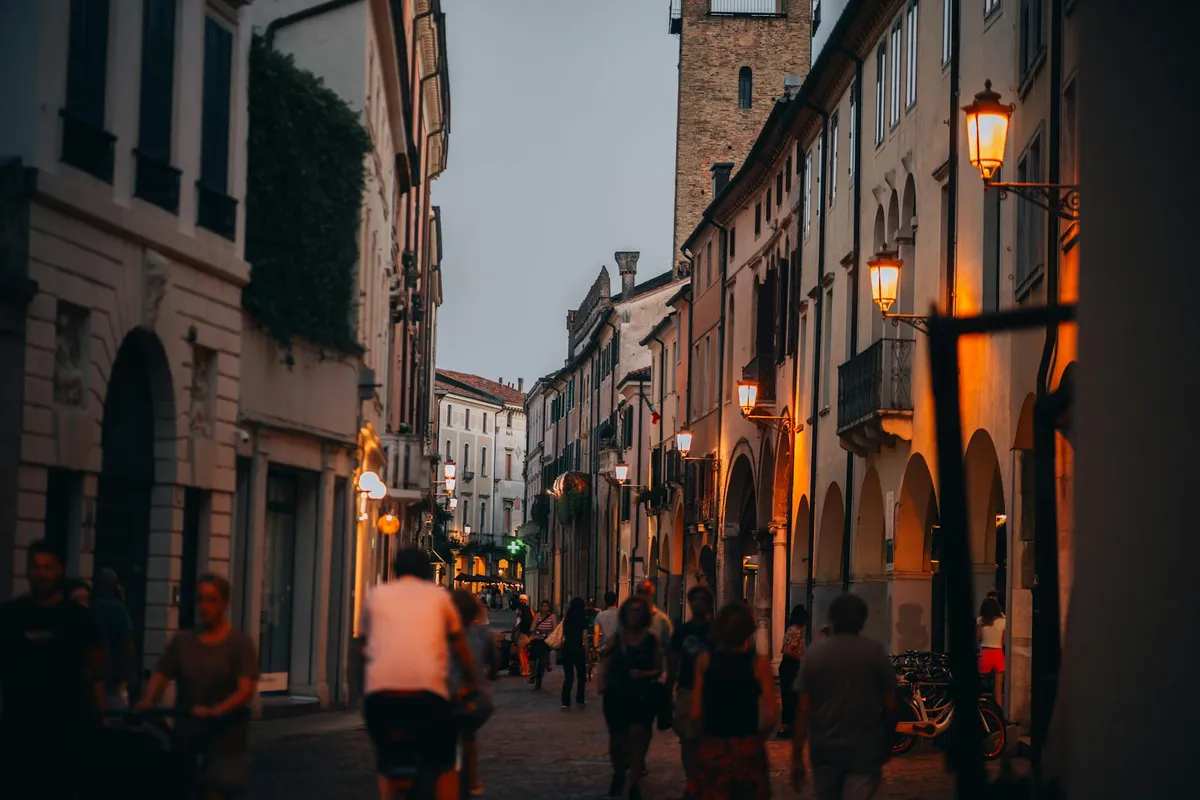
The streets where walking dominates feel different from streets where it doesn't. Anyone who has walked a real pedestrian street and then walked along an arterial road designed for cars has felt the difference, even if they couldn't articulate it. The pedestrian street has a quality of presence — the sense that the street is for the people on it, that the rhythm of movement matches the rhythm of attention, that the experience is something rather than just transit between somethings.
This essay is about the streets that belong to walking. What they share, what they teach about urban life, and why they're harder to make than they appear.
What the walking street is
A walking street isn't necessarily a pedestrianized street. Many of the streets that belong most clearly to walking allow vehicle traffic — at low speeds, in limited density, with pedestrians having priority. Strict pedestrianization sometimes produces streets that feel artificial or empty; the better walking streets accommodate cars without being dominated by them.
What distinguishes the walking street is the relationship between the various elements: pedestrians, vehicles, buildings, business, life. The pedestrians are the primary users; the vehicles accommodate them; the buildings face the street and feed activity into it; the business is conducted at human scale and pace; the life of the street is visible and varied.
The streets that achieve this share specific features. The features are well-documented; they're also consistently violated by current street design practice in most cities.
What walking streets share
Narrow widths. The streets that work best for walking are typically 8-15 meters wide, building face to building face. Narrower streets feel cramped; wider streets dilute the social density that makes the walking experience pleasant. The dimension feels right at the human scale rather than the vehicle scale.
Active building edges. The buildings facing the street house active uses — shops, cafés, restaurants, residences with windows facing out. The activity of these uses spills onto the street through doorways, windows, café tables, and the people who move between inside and outside.
Vehicle accommodation, not dominance. Cars and delivery vehicles can use the street, but they move at speeds that respect pedestrian primacy. 20-30 km/h maximum; many streets effectively slower. The vehicles serve the street; the street doesn't serve the vehicles.
Continuity of edge. Buildings face directly to the street with minimal setback. The continuous building edge creates the sense of enclosure that makes walking feel sheltered rather than exposed. Setbacks for parking, landscaping, or building entries break this continuity and reduce the walking quality.
Walking-pace details. Window displays, menus, signage, public art, building details — all designed to be experienced at walking pace. The reward for slowing down is genuine; the street gives more to attentive walkers than to people moving through.
Mixed use across time. The street has activity at different times — commercial during business hours, social in evenings, residential overnight. The mix sustains use throughout the day rather than concentrating it in narrow time bands.
Connection to broader network. The walking street connects to other walkable spaces. Walking from one good street to another should be possible without traversing hostile vehicle-dominated zones. The network effect compounds; isolated walking streets are weaker than connected walking networks.
Why walking streets are hard to make
Cities that try to create walking streets often fail. The reasons reveal what makes the form difficult.
Design alone doesn't produce them. A street can be designed with all the right physical features and still feel wrong if the supporting context is missing. The active uses have to want to locate there. The pedestrian network has to connect to it. The cultural pattern of walking has to support its use.
Vehicle infrastructure constrains the surrounding network. A walking street surrounded by arterial roads and parking infrastructure is reachable by car but not by foot. The supporting network determines whether the street gets used as a walking destination or just visited briefly by people who arrived by car.
Economic incentives push against walking. Retail favors visibility and parking convenience; restaurants favor the same. Pedestrianization can hurt businesses that depend on car traffic. The economic pressure produces compromises that often degrade the walking quality.
Maintenance is unglamorous. Walking streets require maintenance that vehicle streets don't — cleaning, paving repair, landscaping, fixture maintenance. The maintenance budgets often aren't there. Walking streets that aren't maintained degrade quickly; degraded streets stop attracting walking use.
Time produces use. The walking patterns that make streets feel alive develop over years and decades. New walking streets often take a decade or more to develop the use patterns that make older walking streets work. The intervening period is uncertain; the streets may not produce the patterns at all.
What walking streets teach
The walking street, considered as urban form, teaches lessons that apply broadly to urban design.
Use produces quality. The streets work because they're used by walkers. The use feeds back into the form — businesses respond to foot traffic; building uses adjust to street activity; the maintenance follows the use. Without the use, the form alone doesn't produce the quality.
Networks beat single sites. A connected network of walking streets supports walking life in ways that isolated walking streets cannot. The investment in network connectivity is what makes individual streets succeed.
Vehicle infrastructure shapes pedestrian possibilities. Cities designed around vehicle infrastructure can't produce successful walking environments without modifying the vehicle infrastructure. The two are in tension; one mostly precludes the other at meaningful scale.
Time scales of urban development matter. Walking streets that work have decades or centuries of use behind them. Contemporary urban planning often operates on shorter timescales that produce streets which don't mature into walking quality.
Cultural patterns matter as much as physical form. The cultural practice of walking — for transportation, for social purpose, for pleasure — is what fills walking streets with use. Cities without this cultural pattern can't easily import it through physical design alone.
The implications
For cities trying to create more walking-friendly environments, the lessons suggest a particular approach.
Start with the connections. Individual walking-friendly streets are weaker than networks of them. Investment in network connectivity produces compounding returns.
Modify the surrounding vehicle infrastructure. Walking streets surrounded by hostile vehicle environments don't reach their potential. The harder work is on the surrounding network, not just on individual streets.
Support active uses. Walking streets without active building edges become sterile. Land use policy and economic development should favor the active uses that feed walking-street life.
Invest in maintenance. Walking-friendly infrastructure requires more maintenance than vehicle infrastructure. Budget for it; without it, the streets degrade.
Allow time for use patterns to develop. New walking streets need years to develop the use patterns that make older ones work. Patient stewardship across decades produces what quick interventions cannot.
The cultural dimension
Cultural patterns around walking matter substantially. Cities where walking is the default for short trips have different walking environments than cities where walking is exceptional. The cultural pattern produces the demand that walking-friendly infrastructure responds to.
Cities trying to develop walking culture face a chicken-and-egg challenge. The walking infrastructure encourages walking; the walking demand justifies the infrastructure investment. Neither can be developed entirely independently of the other.
The cities that have made significant progress have done so over decades through coordinated investment in both infrastructure and cultural patterns. The cities that have made less progress have often invested in one without the other and produced mixed results.
The closing observation
The streets that belong to walking are among the most-pleasant urban environments anywhere. They reward time spent in them in ways that vehicle-dominated streets cannot. They are also harder to make than they appear, requiring sustained investment, supporting cultural patterns, and patience across timescales longer than most contemporary urban projects accommodate.
Cities that make walking streets work do so deliberately, over decades, with attention to factors beyond just the streets themselves. The work is unglamorous but the results compound into urban quality that other approaches cannot achieve.
The walking streets remain among the most-valuable urban inventions humans have produced. Worth taking seriously. Worth working toward.